Introduction
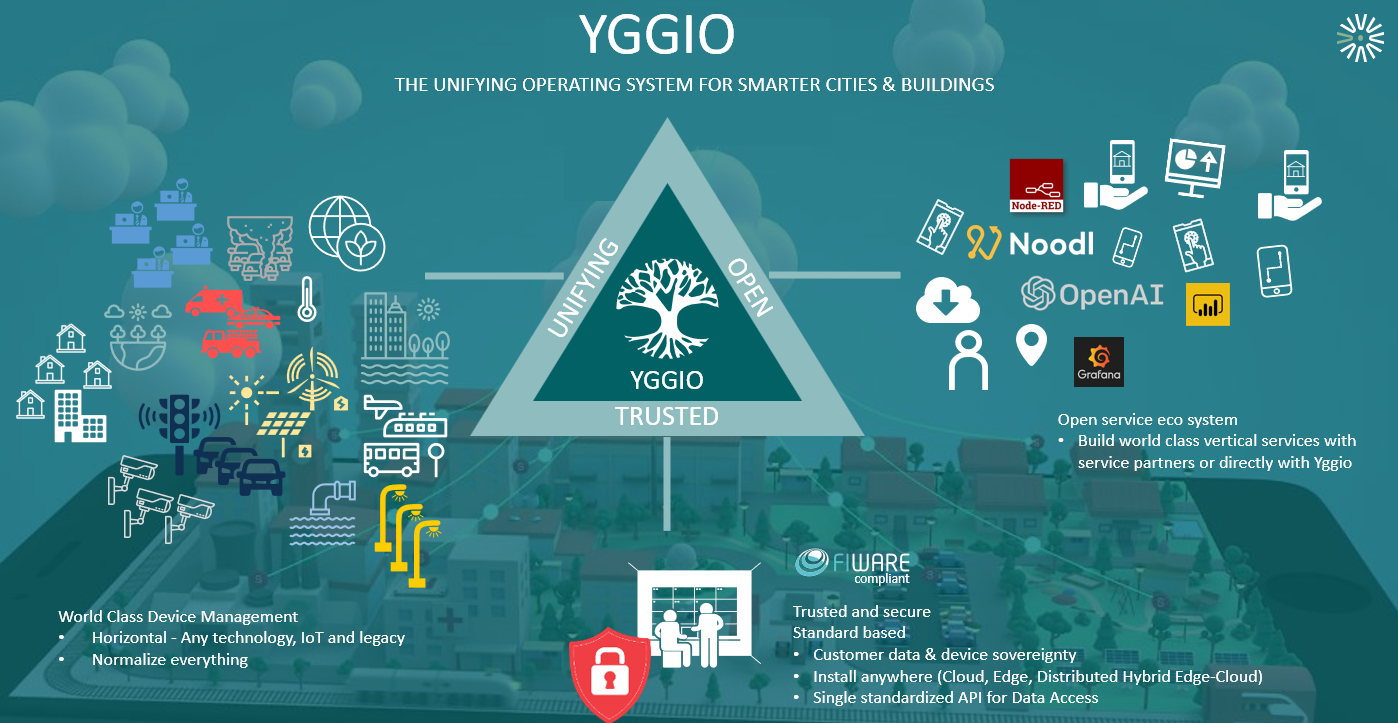
Most digitalisation projects start well and end in a silo. A leak-detection system arrives with its own app, its own portal and its own idea of what a sensor is. Then comes energy monitoring, with another. Three years later there are nine systems, nine logins, no shared picture, and the data belongs to nine suppliers instead of to you.
Yggio is the other way round. One open, vendor-neutral data layer underneath everything, in the cloud or on your own hardware. Devices connect to it whatever they speak, their data comes out in a shared language, and every use case you add builds on the same foundation instead of starting again.
That changes the economics of digitalisation. The first project pays for the foundation. Every one after it is cheaper, faster and worth more, because the data is already there and already means something.
Connect anything, keep what you have
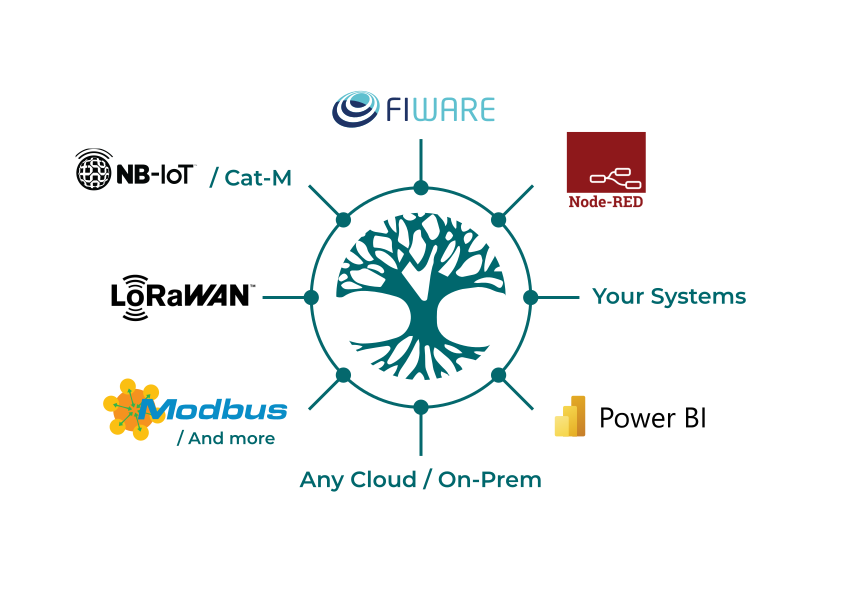
Whatever is already installed on site, Yggio speaks to it. LoRaWAN, NB-IoT, Cat-M, BACnet, Modbus, Zigbee, Z-Wave, Matter, MQTT and HTTP come as standard, and anything missing can be added.
So a new use case never begins by ripping out what works. The meters in the basement, the sensors from the pilot, the building system installed a decade ago: they all become sources for the same platform, and you are free to choose the best hardware for each job rather than the hardware your platform happens to support.
One language for all of it
A temperature is a temperature, whoever made the sensor. Yggio translates every vendor's raw bytes into open FIWARE Smart Data Models with NGSI-LD naming.
This is the part that pays off for years. The application you write today still works when you change supplier tomorrow. A dashboard built for one building works for the next. Data you hand to a partner, a tenant or another city needs no glossary and no mapping table, because it already follows an open standard rather than a private one.
Data that arrives ready to use
Raw readings are rarely the number anyone actually wants. Translators decode payloads, calculate, merge and enrich as data comes in, and they chain together, so a new requirement is a new link rather than a rewrite.
That means the hard part is solved once, close to the data, and everything downstream simply reads a field. Upload your own translator and extend the platform without waiting for us to change its source code.
Turn data into action
Turn "someone really ought to check that" into something that simply happens. Drag a condition onto an action: raise an alarm, send a report, switch something on when the sun goes down. No code, no deployment.
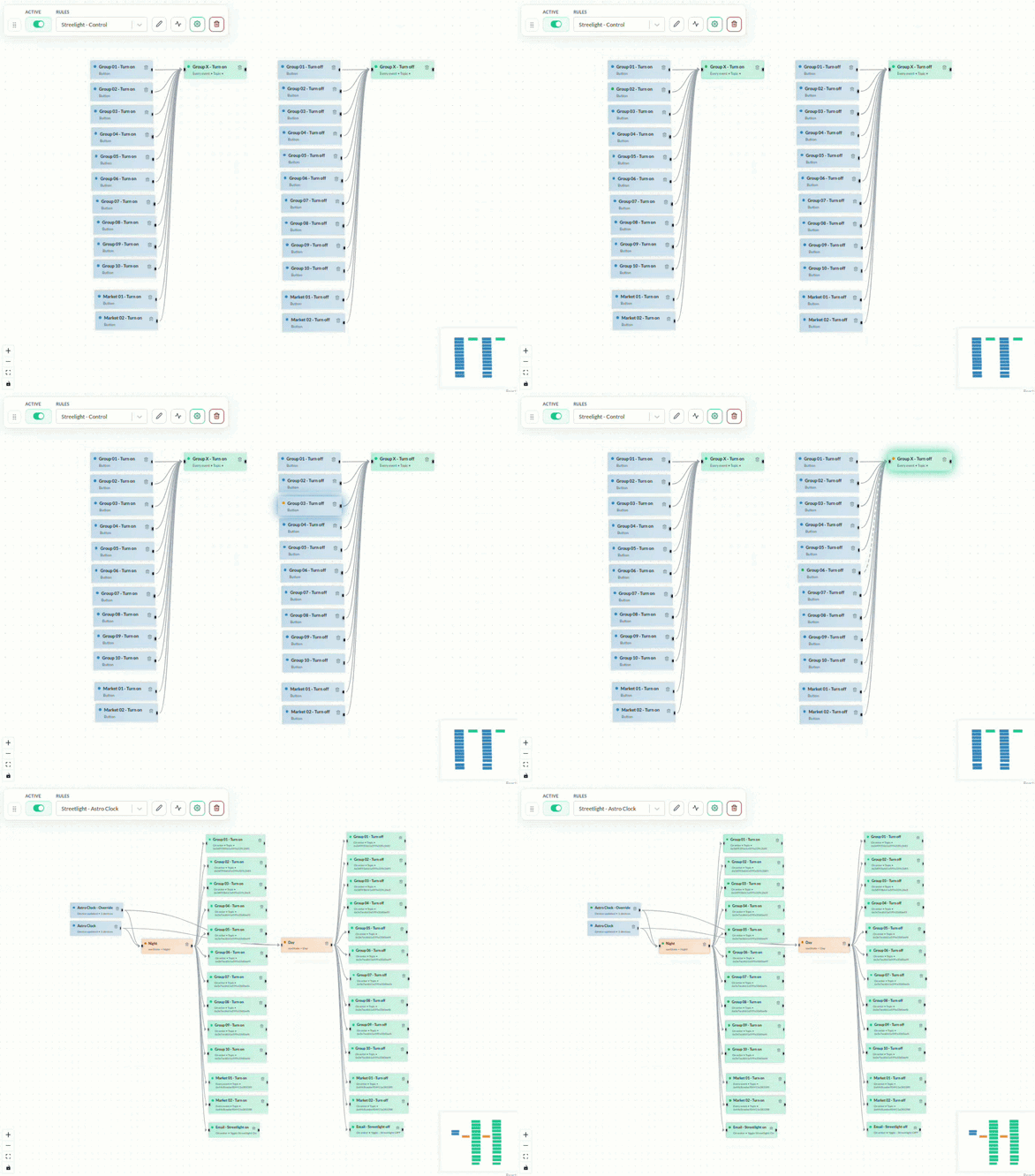
Alarms fire the moment something needs attention, a freezer drifting warm or a battery about to give out, and the Alarm Monitoring View shows the state of the whole estate at a glance. Access changes, device updates, alarms and downlinks build a history you control, so when something goes wrong the trail back to the cause is already waiting.
See it, all of it, in one place
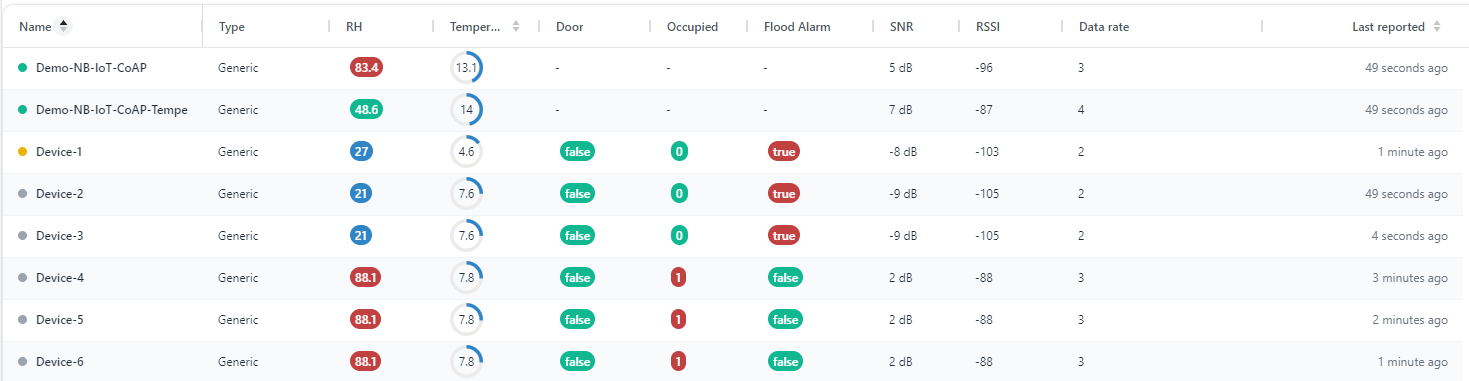
Everyone gets the same truth, shaped for the job they actually do. A dashboard a caretaker acts on in the morning and a board reads at the end of the quarter, built from the same data with drag-and-drop widgets, KPIs, charts and maps.
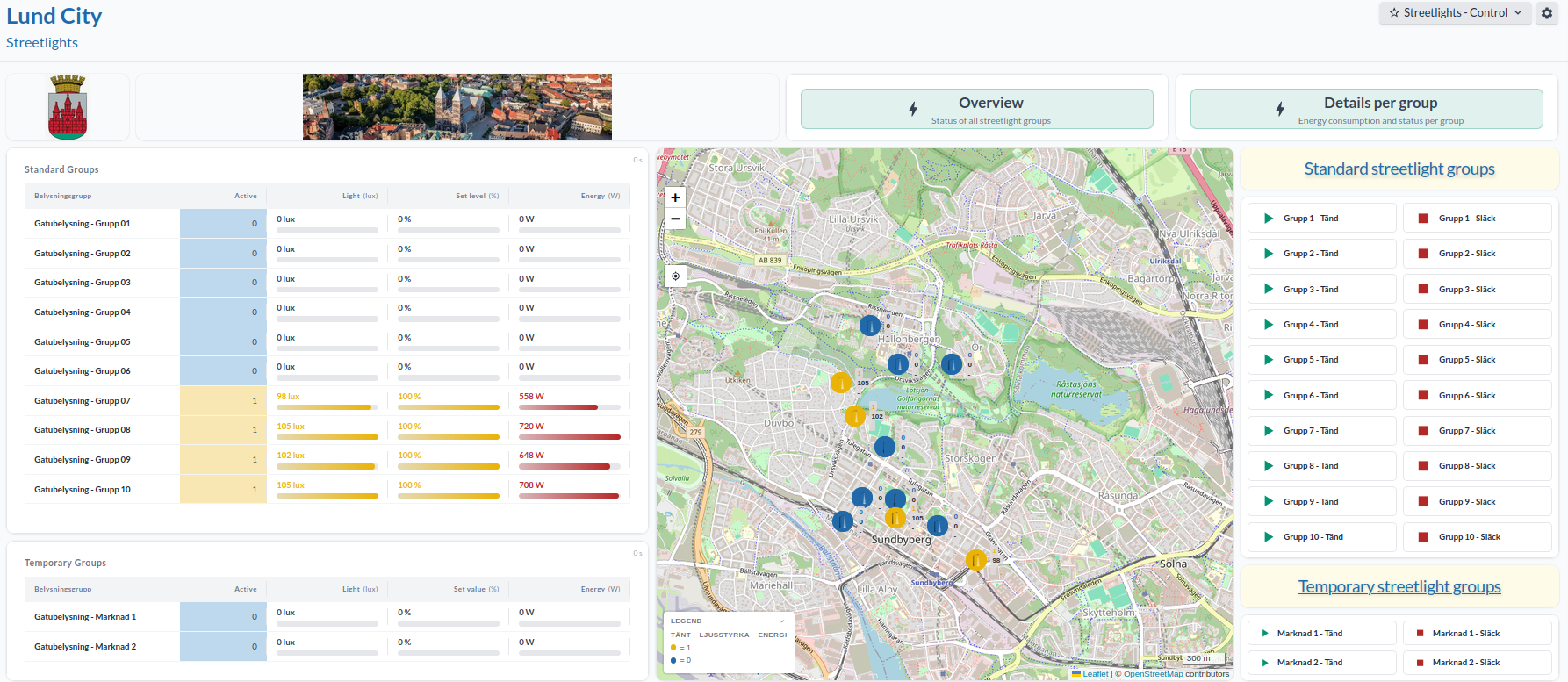
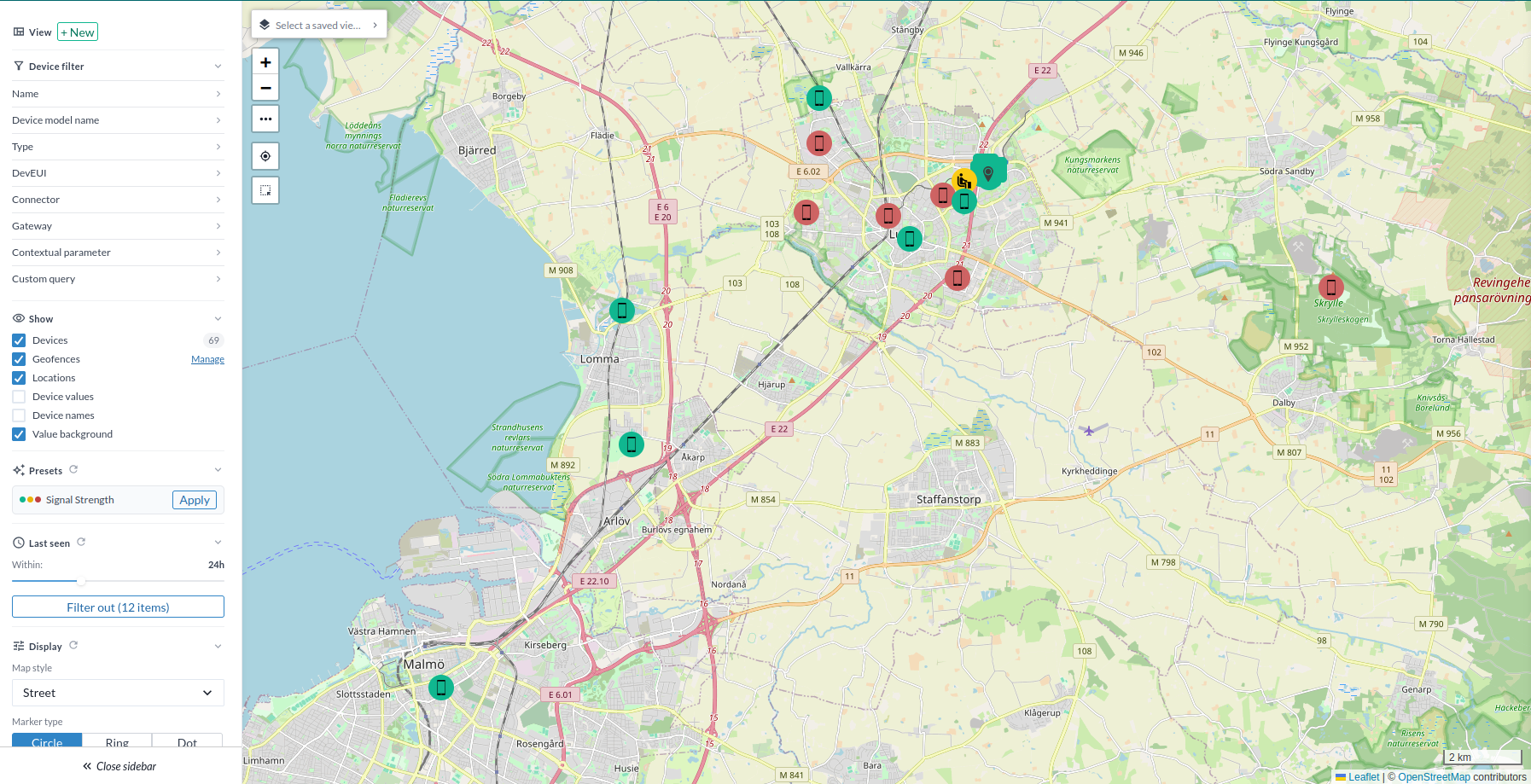
On the map, filter thousands of devices down to the handful that matter, watch them update live, and draw a geofence to hear about it the moment something leaves where it should be.
One platform, many stakeholders
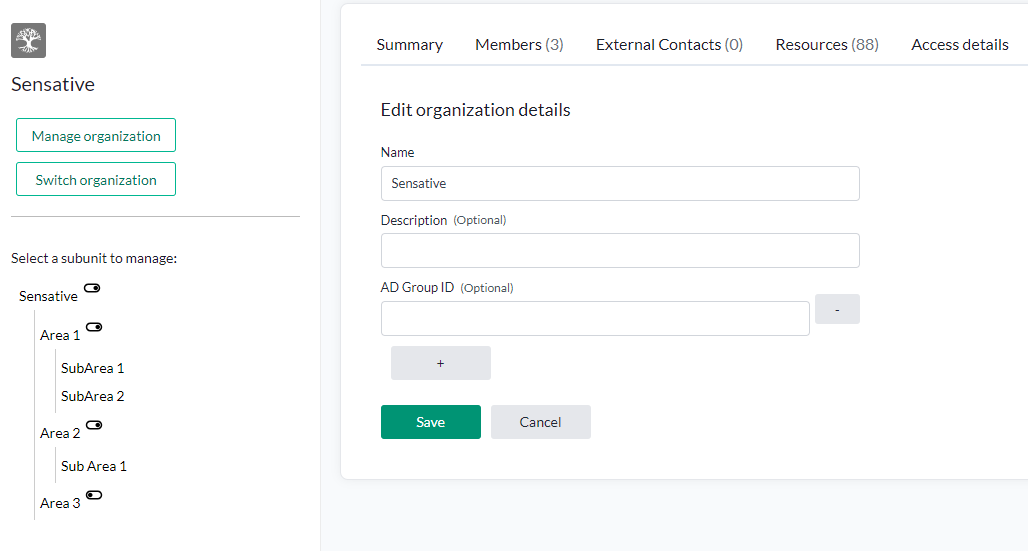
A property owner sees their own buildings, a service provider only the devices they maintain, a municipality the whole picture. You decide who sees what, through organisation policies or by sharing directly with a user or a group.
That is what lets a platform serve a whole operation rather than one department, and what lets you invite partners and tenants in without handing over anything else.
Your data, in the tools you already use
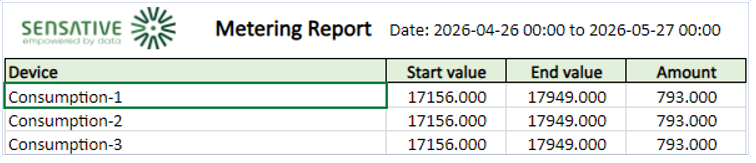
The report that used to take someone a day each month now lands in their inbox on its own. Pick the numbers once, let the Rule Engine decide when they go out, and read them wherever your organisation already works, whether that is Power BI, Excel or a Yggio dashboard.
Everything in the platform is reachable through open APIs, so your data feeds the systems you already run instead of becoming another place people have to log into.
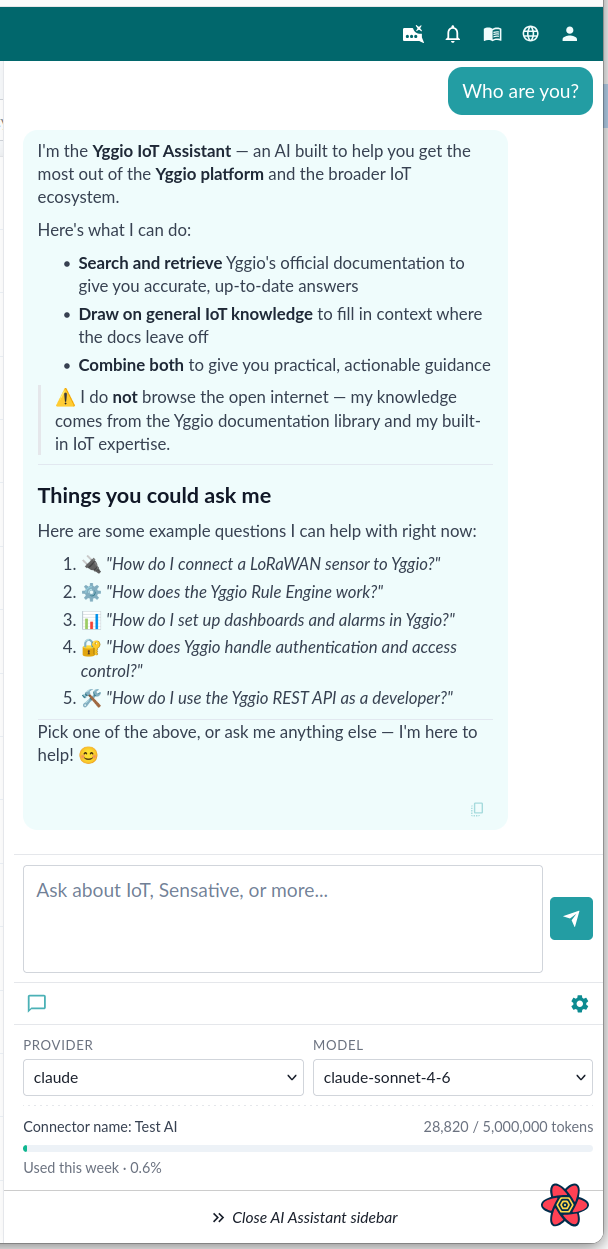
Ask Yggio questions
Nobody should have to read a manual to get an answer. Connect your preferred AI assistant and let your team ask Yggio questions in plain language: how something works, how to set it up, what a field means. Answers are drawn from the documentation, and from the internet, instead of being hunted for.
Querying your own device data and running automations through the API are coming.
Secure by design
Security was not bolted on afterwards. Yggio is built Secure by Design on a zero trust architecture, and identity is handled by Keycloak, so your people sign in with the accounts and the rules you already run. One less directory to maintain, one less password to lose.
Start with one building, grow to a city
Begin with a pilot, prove it, and expand without changing platform. Yggio scales out as the load arrives, keeps running when parts of it do not, and deploys as happily at the edge as in a data centre. It is built for very large numbers of devices and data nodes, and tested there.
Size only matters if the platform stays workable at that size. Handle one device when that is what the job needs, or select thousands and act on them together: add a translator, change a threshold, set access rights, push a settings update, import and export by CSV. An estate of thousands is managed as a set rather than one device at a time, which is what keeps a city-scale rollout a task instead of an ordeal.
Where this takes you
The goal was never sensors. It is a digital foundation your organisation owns, that every future project can stand on, and that no supplier can take away.
Start with the problem in front of you. Add the next one when you are ready. Because they share a data layer, the second is easier than the first, and the tenth is easier still, until you are running an operation on evidence rather than on assumptions.
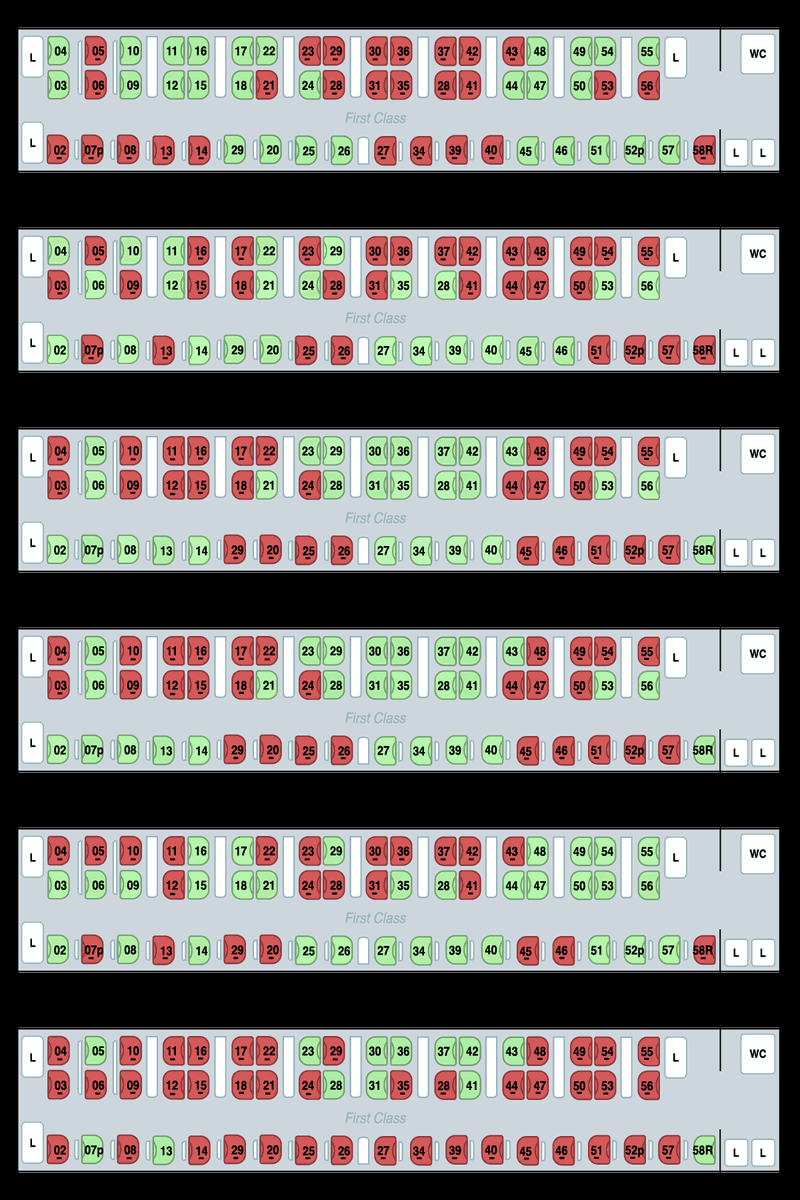
Highlighted use case: Sensative SeatSense
Real-time seat occupancy without guesswork. See how your public transport is actually used. Verified accuracy > 98%.
Further Technical Information
For how the platform is built, and the full set of features it offers, see the System Overview. For more detailed information, read the other sections at https://staging.yggio.net/docs/
To complement this documentation, Yggio also has interactive API documentation. The data models used by the REST API are described on the Models page. For examples of common API calls, see Handling Iotnodes.
Contact Us
If you have general questions or need help getting started with Yggio, contact us at info@sensative.com. For technical questions regarding your development on Yggio, contact us at yggio@sensative.com.
Support
For technical support, please submit a support ticket