Plattform och applikationer
Allt under den här punkten är specifikt för någon teknik. Allt ovanför är det inte. Det är hela tricket, och det är därför plattformslagret avgör hur långt ett digitaliseringsprogram kan nå.
Plattformslagret
Den horisontella plattformen administrerar enheterna och normaliserar, lagrar, bearbetar och skickar vidare deras data. Den skickar också data tillbaka, för att styra en aktuator.
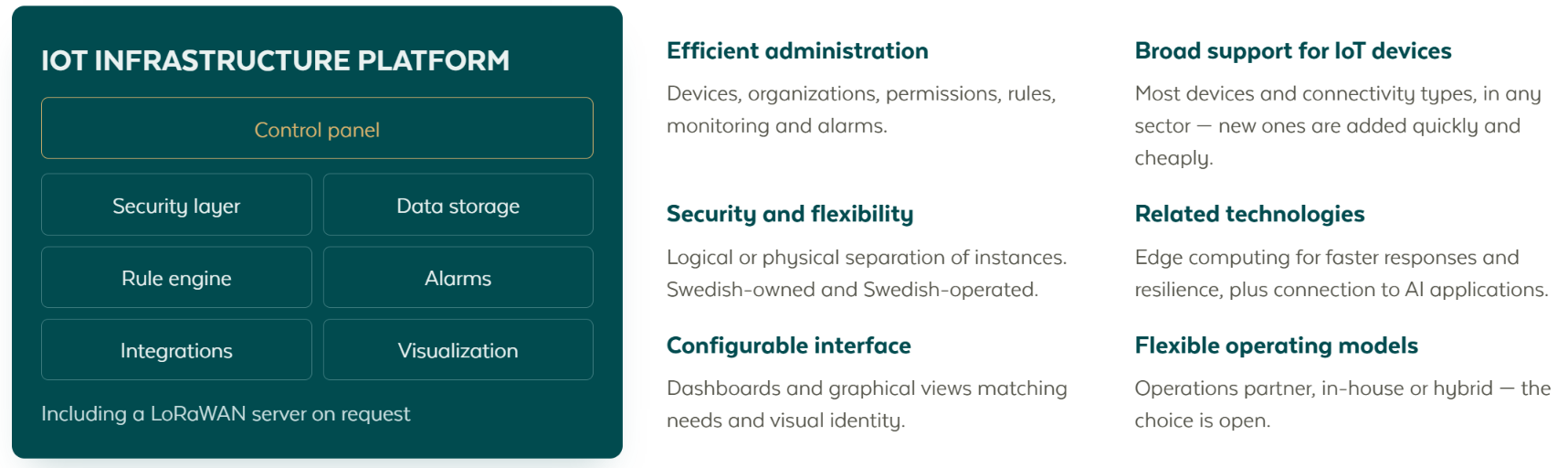
Dess ansvar:
- Enhetsadministration, inklusive organisationer, behörigheter, regler, övervakning och larm.
- Bredd i enhetsstödet över olika konnektivitetstyper, och förmågan att lägga till nya enhetstyper snabbt när de dyker upp.
- Normalisering till en gemensam datamodell, vilket är det som gör allt ovanför möjligt.
- Separation av instanser, logisk eller fysisk, för tillämpningar eller organisationer som kräver det.
- Edge computing för snabbare svar och högre resiliens, samt anslutning av AI-applikationer.
- Flexibel drift över moln, edge och hybrid.
Det här är vad Yggio är. Enheter kommer in från vilken som helst av teknikerna i den här guiden och blir samma sorts enhet, med samma fält, samma rättigheter och samma historik. En regel som skrivs idag fortsätter fungera när nästa års sensor ersätter årets, eftersom regeln aldrig skrevs mot sensorn. Börja med en enhet, eller ta in tusen i en batch; plattformen byter inte form.
Se Systemöversikt för hur den är byggd.
Applikationslagret
Det är här nyttan till slut hämtas hem, och där arbetet i varje lager under betalar sig.
- Visualisering och analys i Grafana, Power BI eller egna dashboards.
- Integration med verksamhetssystem som ERP eller CMMS, vilket kan leda till automatiserade åtgärder som att skapa ett arbetsorderärende.
- Publika tjänster, till exempel en webbplats som visar vattentemperaturen vid en badplats eller antalet lediga parkeringsplatser.
- Automation utifrån regler eller AI-analys, som att justera belysning eller ventilation, eller att påminna om underhåll.
- Notifiering via push, SMS eller e-post när något behöver uppmärksamhet.
Vad det här gör möjligt
Ambitionen är värd att uttalas rakt ut, eftersom den är nåbar. En byggnad som rapporterar sina egna fel. En stad som leder om trafiken runt ett hinder innan någon hunnit ringa in det. Ett vattennät som hittar läckan medan den fortfarande är liten. Inget av det kräver ny fysik. Det kräver sensorer som redan finns, anslutna över nät som redan finns, normaliserade till data som vem som helst kan bygga vidare på.
Det sista steget är det som avgör om ett projekt blir en pilot eller en plattform.
Vart du går härnäst
- Systemöversikt för hur Yggio implementerar plattformslagret.
- Connectors för att ansluta ett specifikt nät eller system.
- Translatorer för hur enheters payloads avkodas och normaliseras.
- Utbildningsmaterial för att omsätta det i praktiken.