Översikt
En sensor stor som en tändsticksask, som går i flera år på ett batteri, kan berätta att ett rör läcker bakom en vägg tre våningar ned. Det är den enkla delen. Den svåra delen är att nästa sensor du köper säger det på ett annat sätt, över en annan radio, i ett annat format, och att den därefter är ett tjugo år gammalt fastighetssystem som aldrig har hört talas om internet.
Den här guiden går igenom hela vägen, lager för lager, från sensorn i fält till applikationen som någon faktiskt använder. Den är skriven för dig som specificerar, upphandlar eller integrerar IoT-system, och den förutsätter inga förkunskaper.
Varje teknik här är konstruerad för en viss avvägning mellan räckvidd, energiförbrukning, datahastighet och kostnad. Det finns ingen bästa teknik. Det finns den som passar uppgiften, och konsten är att veta vilken.
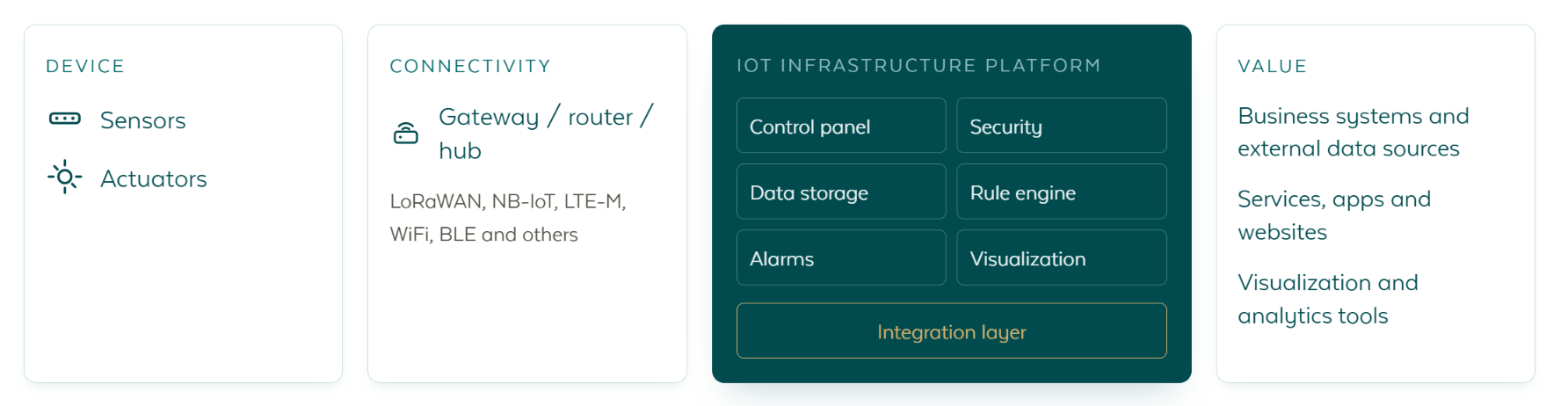

Varför normalisering är kärnproblemet
Börja här, eftersom allt annat följer av det.
IoT är inte en teknik utan dussintals, från olika branscher och olika årtionden. Enheter använder olika radioteknik, olika protokoll och olika dataformat, och formaten är oftast specifika för en enskild tillverkare.
Samma mätvärde från samma typ av sensor kommer in i olika form från varje tillverkare. Alla avläsningarna nedan betyder 25,5 grader Celsius, och den sista uttrycker det i hundradelar:
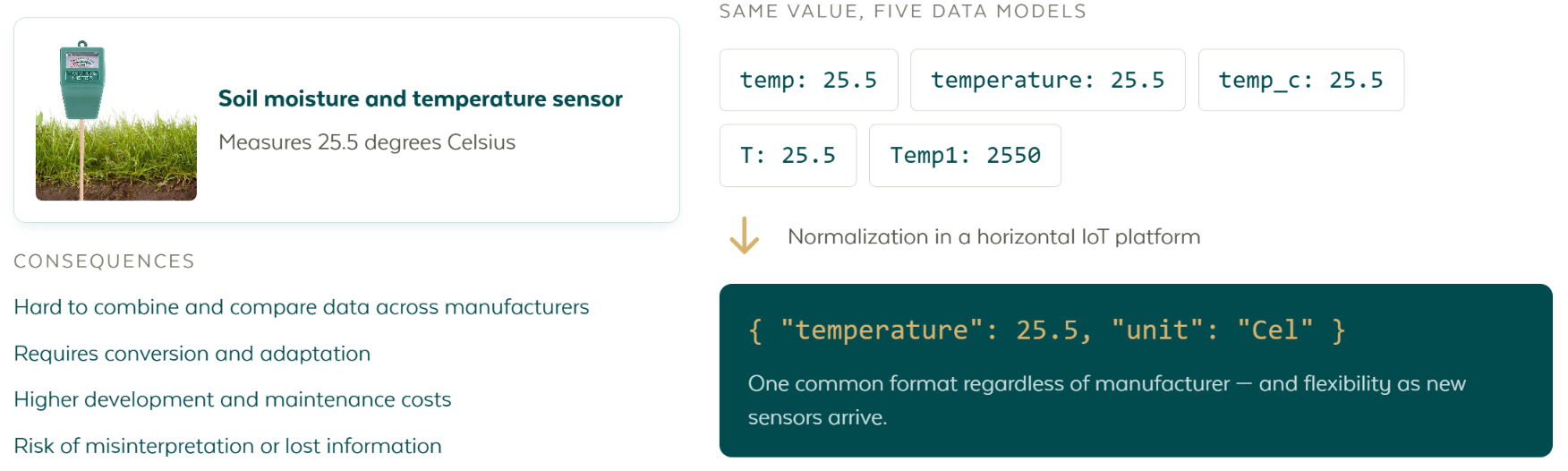
Lös det en gång så blir allt ovanför enkelt. Lös det per projekt så kommer du att lösa det för alltid. Det är hela argumentet för en horisontell IoT-plattform: ta emot data från många tekniker och normalisera den till en gemensam form, så att en dashboard, en regel eller en rapport aldrig behöver veta vilken sorts enhet datan kom från.
Yggio gör detta med translatorer, små avkodare som omvandlar en tillverkares payload till namngivna, normaliserade fält. Otaliga enhetsmodeller stöds direkt, listan växer kontinuerligt och nya är snabba att lägga till. Det är det som gör valet av sensor till ett tekniskt beslut i stället för en begränsning i plattformen. Se Translatorer.
IoT-stacken
Varje IoT-system har de här lagren, oavsett om någon har ritat upp dem. Varje lager bygger på det under sig och döljer sina detaljer för det ovanför.
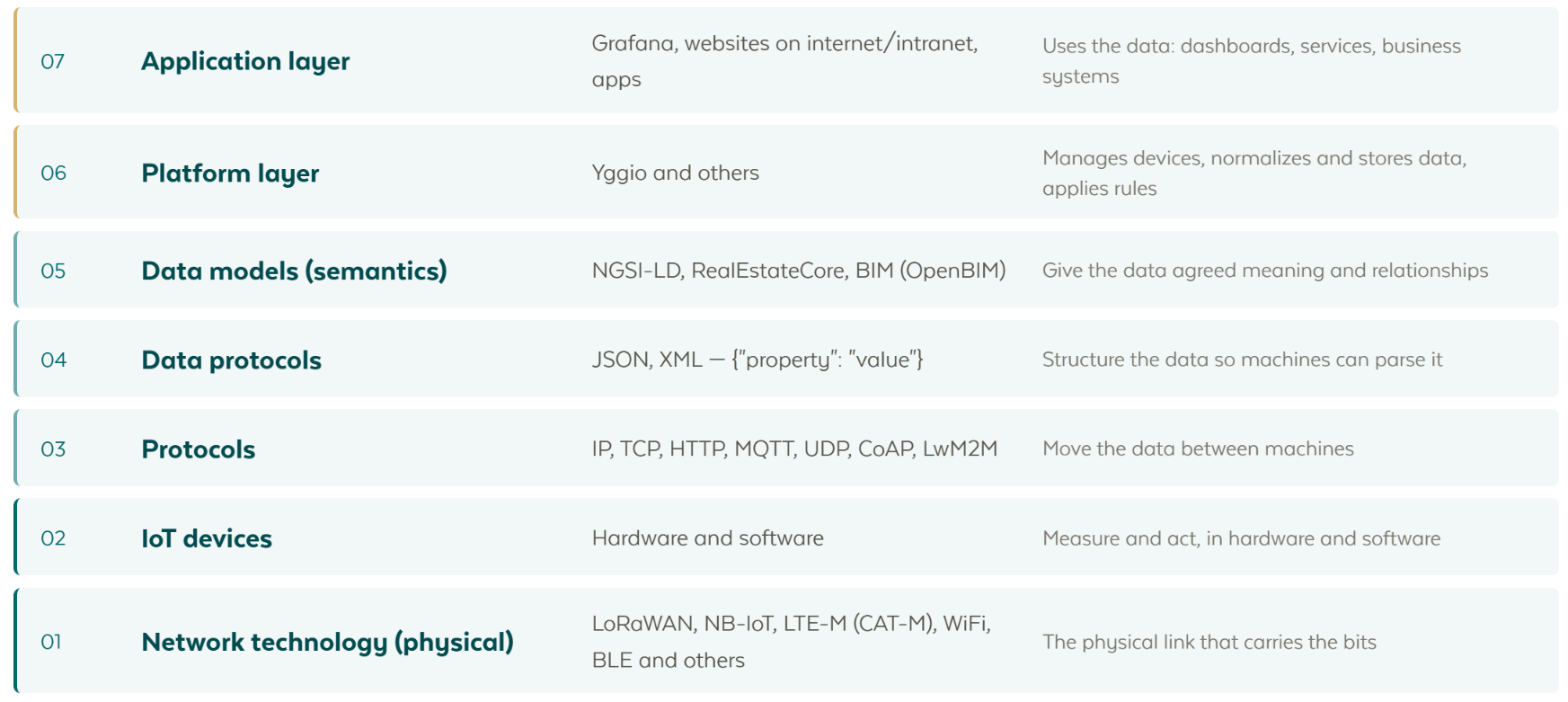
Läs resten av guiden nedifrån och upp i figuren:
- Enheter, sensorerna och aktuatorerna själva.
- Nätverkstekniker, radiolänkarna och kablarna som bär datan.
- Protokoll, reglerna som flyttar den på ett tillförlitligt sätt.
- Dataformat, JSON och XML, hur de är uppbyggda och vad de kan uttrycka.
- Datamodeller, som ger datan en överenskommen innebörd.
- Plattform och applikationer, där nyttan hämtas hem.