Nätverkstekniker
Det är här de flesta upphandlingsdiskussioner hamnar, och det är oftast fel diskussion. Räckvidd, energiförbrukning och datahastighet drar åt olika håll, och ingen radio vinner alla tre. Välj den som matchar uppgiften, och låt sedan plattformen ta hand om skillnaden.
| Familj | Tekniker | Konstruerad för |
|---|---|---|
| LPWAN | LoRaWAN | Lång räckvidd och mycket låg energiförbrukning, små payloads som skickas sällan |
| Mobilt IoT | NB-IoT, LTE-M | Bred täckning i befintliga nät, låg energiförbrukning, inget eget nät att bygga |
| Mobilt bredband | 4G LTE, 5G | Höga datahastigheter och låg latens, nätanslutna tillämpningar |
| LAN | WiFi, Ethernet | Hög kapacitet över kort räckvidd, befintlig infrastruktur |
| Kortdistans | BLE | Mycket låg energiförbrukning, små payloads, enkelt mot mobil och gateway |
| Mesh | ZigBee, Z-Wave, Matter | Enheter vidarebefordrar åt varandra och ökar räckvidden inomhus |
| Fastighetsautomation | BACnet, KNX, Modbus | Värme, ventilation, kyla och fastighetssystem |
| Industri | Modbus, PROFINET | Robust realtidsstyrning i produktionen |
De fyra egenskaper som avgör
- Räckvidd, från tiotals meter för kortdistans- och mesh-tekniker till kilometer för LPWAN och mobilnät.
- Energi, där LPWAN, mobilt IoT och BLE klarar batteridrift i flera år, medan WiFi och mobilt bredband i regel kräver nätanslutning.
- Datahastighet, som stiger i samma ordning, från några få byte per meddelande på LPWAN till video på WiFi och 5G.
- Infrastruktur, alltså om du bygger nätet själv, använder en operatörs, eller använder det som redan finns i byggnaden.
En femte fråga är vem som äger nätet. Ett privat LoRaWAN-nät är ditt att driva och laga; ett operatörsnät är deras, vilket tar bort arbete och lägger till ett beroende. Båda är legitima, och valet följer oftast hur kritisk tillämpningen är och hur mycket av beståndet du styr över.
LPWAN
Lågeffektsnät med stor täckning byter datahastighet mot räckvidd och batteritid, och bytet är dramatiskt: kilometer av räckvidd och år av batteri, i utbyte mot små payloads som skickas då och då.
LoRaWAN är det dominerande öppna exemplet. Den har en utmärkt länkbudget, arbetar i olicensierat spektrum (868 MHz i EU) och kan byggas privat eller köpas av en operatör. Den passar fjärrövervakning, smarta städer, byggnader, jordbruk och industri, där små mätvärden skickas var femte minut till några gånger om dagen.
Egenskaperna att konstruera kring:
- Payloads är små, typiskt några tiotal byte, så enheter kodar aggressivt.
- Räckvidden beror starkt på topografi och byggnadskonstruktion. Källare och innerrum behöver ofta en extra inomhusgateway. Att placera enheter nära ventilationstrummor och trapphus ger ofta flera dB.
- Leverans är som standard "bästa förmåga". Bekräftade meddelanden och omsändning finns där de är värda batteriet.
- Regler för sändningstid i olicensierat spektrum begränsar hur ofta en enhet får sända.
Kedjan har fyra steg: enheten sänder ut; varje gateway inom räckhåll tar emot och vidarebefordrar över IP; nätverksservern rensar bort dubbletterna och hanterar säkerhet och session; plattformen tar emot payloaden, oftast över MQTT. Att flera gateways hör samma sändning är normalt och ger redundans utan extra kostnad.
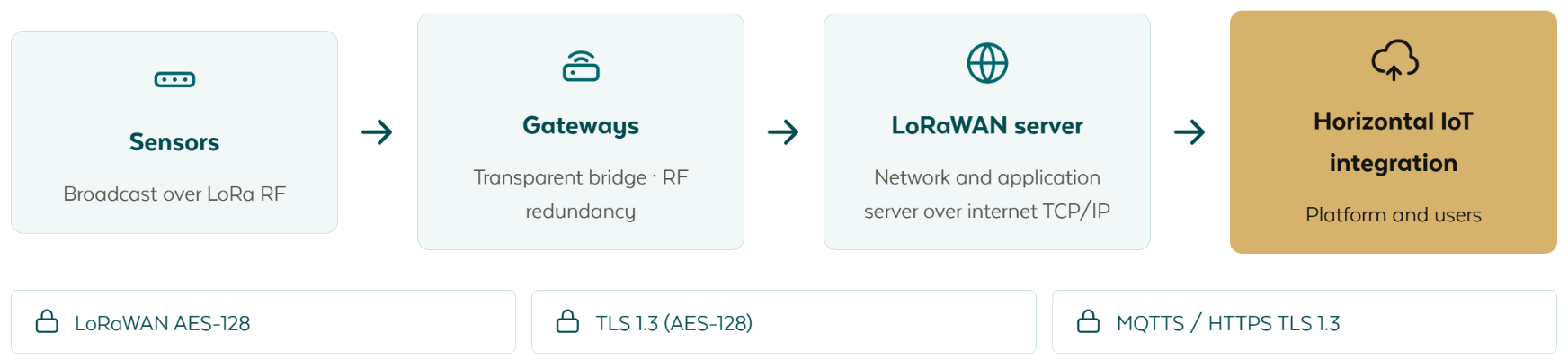
Lägg märke till krypteringen längs figurens underkant: varje steg skyddar sin egen sträcka, i stället för att en nyckel täcker hela vägen.
Mobilt IoT: NB-IoT och LTE-M
NB-IoT och LTE-M (Cat-M1) är mobiltekniker konstruerade för IoT snarare än för telefoner. De ger bred täckning i ett nät som redan finns, med låg energiförbrukning, och kräver ingen egen nätutbyggnad utöver ett SIM-kort.
- NB-IoT är optimerad för små payloads och gles rapportering, med utmärkt inomhuspenetration, och passar mätinsamling och stillastående sensorer.
- LTE-M stödjer enheter i rörelse och snabbare överföringar, vilket passar trackers och allt som behöver växla mellan celler.
Båda är konstruerade för att tränga in i byggnader och nå inomhus och ned i källare. Båda kräver ett operatörsabonnemang, och båda lämnar protokollvalet öppet, så enheter kan komma in över MQTT, CoAP, UDP eller rå TCP. Den friheten är användbar och den är också arbete: integrationen blir mindre enhetlig än med LoRaWAN, där nätverksservern standardiserar överlämningen.
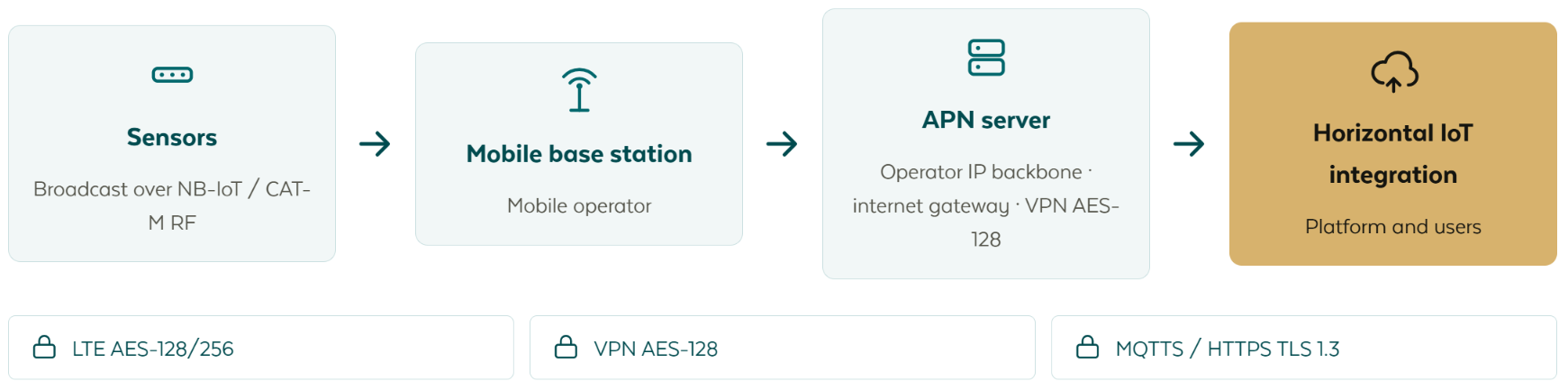
Operatörens APN-server är överlämningspunkten. Allt till vänster om den tillhör mobilnätet; allt till höger är vanlig internettrafik.
Mobilt bredband: 4G och 5G
4G LTE och 5G erbjuder höga datahastigheter och låg latens, vilket är vad tillämpningar med stora payloads eller realtidskrav behöver: kameror, video, AI i kanten, fordonssystem och kritisk styrning.
Priset är energi och kostnad. De här radiolänkarna förutsätter nätanslutning eller regelbunden laddning, och abonnemangen kostar mer än IoT-anpassad konnektivitet. På de högsta 5G-frekvenserna kortas räckvidden betydligt. 5G stödjer dessutom mycket stora enhetspopulationer och network slicing för kritisk trafik.
LAN: WiFi och Ethernet
WiFi ger mycket hög kapacitet och låg latens inomhus, med infrastruktur som de flesta byggnader redan har. Den förutsätter nätanslutning utom vid korta sändningscykler, har kortare räckvidd än mobilnät eller LPWAN, och delar ett trångt frekvensband i täta miljöer.
Ethernet är fortfarande det mest tillförlitliga alternativet överallt där en kabel kan dras, och är vanligt för gateways, styrsystem och allt stillastående som betyder något.
Kortdistans: BLE
Bluetooth Low Energy är byggd för mycket låg energiförbrukning och små payloads över kort till medellång räckvidd, i praktiken 100 till 200 meter utomhus med BLE 5.0 och betydligt mindre genom väggar.
Den är enkel att integrera med mobiler och gateways, vilket gör den till det självklara valet för wearables, beacons, tillgångstaggar, lås och en stor familj medicintekniska produkter. BLE-enheter når internet via en gateway eller en telefon i stället för direkt.
Mesh: ZigBee, Z-Wave och Matter
Mesh-protokoll låter enheter vidarebefordra åt varandra, så täckningen växer när nätet växer och en enskild hindrande vägg slutar spela roll. Räckvidden per hopp är kort, typiskt 10 till 50 meter inomhus, och datakapaciteten är blygsam, vilket passar fastighets- och hemautomation väl.
- ZigBee har ett stort ekosystem och delar 2,4 GHz-bandet.
- Z-Wave använder spektrum under 1 GHz med ett begränsat antal kanaler och innehåller AES-128 S2-säkerhet.
- Matter är en nyare standard på applikationsnivå, konstruerad för att låta enheter från olika ekosystem fungera tillsammans över WiFi, Ethernet och Thread.
Alla behöver en hubb eller gateway för att nå internet.
Det är gatewayen som de lokala teknikerna har gemensamt, oavsett radio:
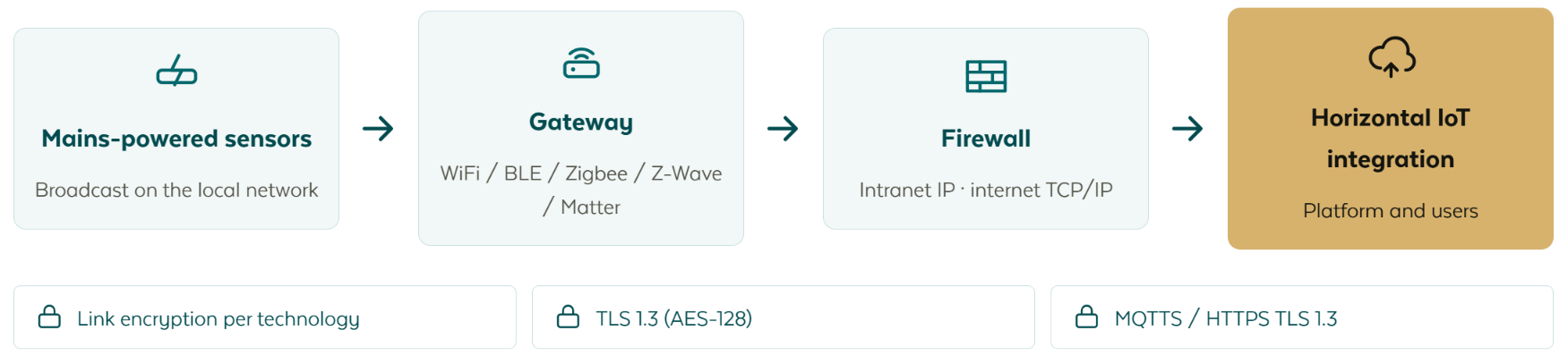
Gatewayen är också där protokollet byts. Vad enheten än talade lokalt är det MQTT, HTTP eller CoAP över IP som lämnar gatewayen, vilket är varför de här teknikerna integreras på samma sätt trots att radiolänkarna är mycket olika.
Fastighets- och industriprotokoll
BACnet, KNX, Modbus och PROFINET kom först, och de driver fortfarande mycket av det som är installerat i byggnader och fabriker. De är robusta, arbetar i realtid och är grundligt beprövade.
De är äldre än internets säkerhetsmodeller och konstruerades för isolerade nät, så säkerheten läggs normalt på nätverksnivå runt dem snarare än inuti protokollet. De är också där en stor mängd befintlig och värdefull data redan finns. Den mest användbara datan i en byggnad finns ofta redan där, i ett system som installerades långt innan någon sa ordet IoT.
Yggio behandlar allt detta som förstklassigt. Connectors täcker LoRaWAN-nätverksservrar, mobila och generiska enheter över MQTT, HTTP, CoAP och UDP, fastighets- och industrisystem, samt hubbar som tar in Z-Wave, ZigBee och Matter. En LoRaWAN-server kan ingå där du vill ha en. Oavsett hur datan kommer in landar den som samma sorts enhet, med samma fält, rättigheter och historik. Se Connectors.
Att välja mellan dem
Arbeta bakåt från tillämpningen, inte framåt från tekniken:
- Hur ofta behöver värdet komma in, och hur snabbt efter att det ändrats?
- Hur mycket data är det, per meddelande och per dygn?
- Finns nätanslutning, eller måste den gå i flera år på ett batteri?
- Var sitter enheten fysiskt, och vad finns mellan den och närmaste infrastruktur?
- Vem ska äga och underhålla nätet?
Svaren lämnar oftast en eller två kandidater, och resten av diskussionen handlar om kostnad och täckning.