Overview
A sensor the size of a matchbox, running for years on one battery, can tell you that a pipe is leaking behind a wall three floors down. That is the easy part. The hard part is that the next sensor you buy will say it differently, over a different radio, in a different format, and the one after that will be a twenty-year-old building system that has never heard of the internet.
This guide walks the whole path, layer by layer, from the sensor in the field to the application someone actually uses. It is written for people specifying, procuring or integrating IoT systems, and it assumes nothing.
Each technology here was designed for a particular balance of range, power, data rate and cost. There is no best one. There is the one that fits the job, and the skill is knowing which.
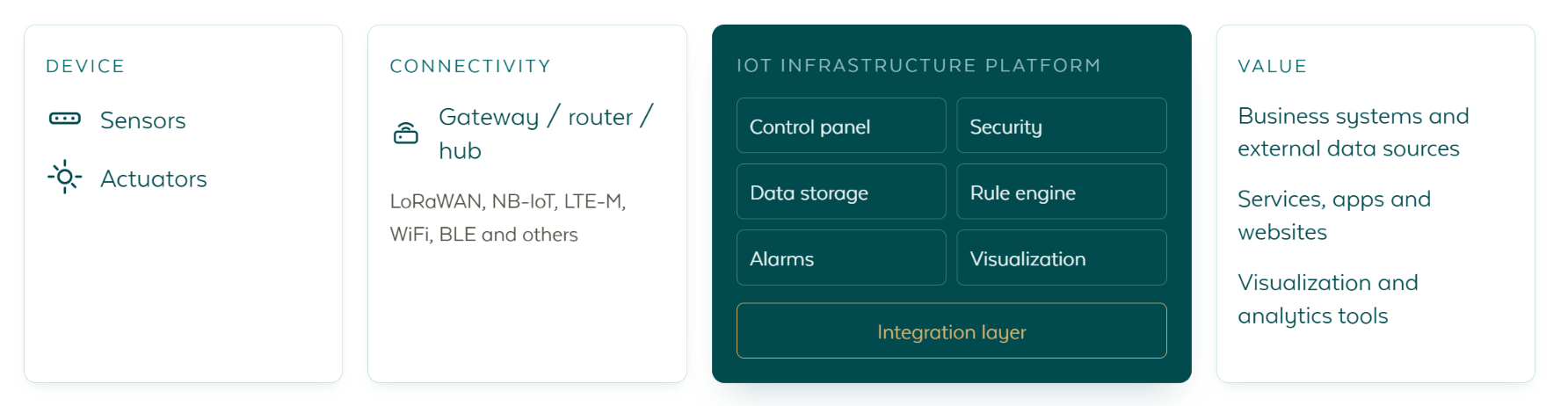

Why normalization is the central problem
Start here, because everything else follows from it.
IoT is not one technology but dozens, from different industries and different decades. Devices use different radios, different protocols and different data formats, and those formats are usually specific to a manufacturer.
The same reading from the same kind of sensor arrives in a different shape from every manufacturer. All of the readings below mean 25.5 degrees Celsius, and the last one expresses it in hundredths:
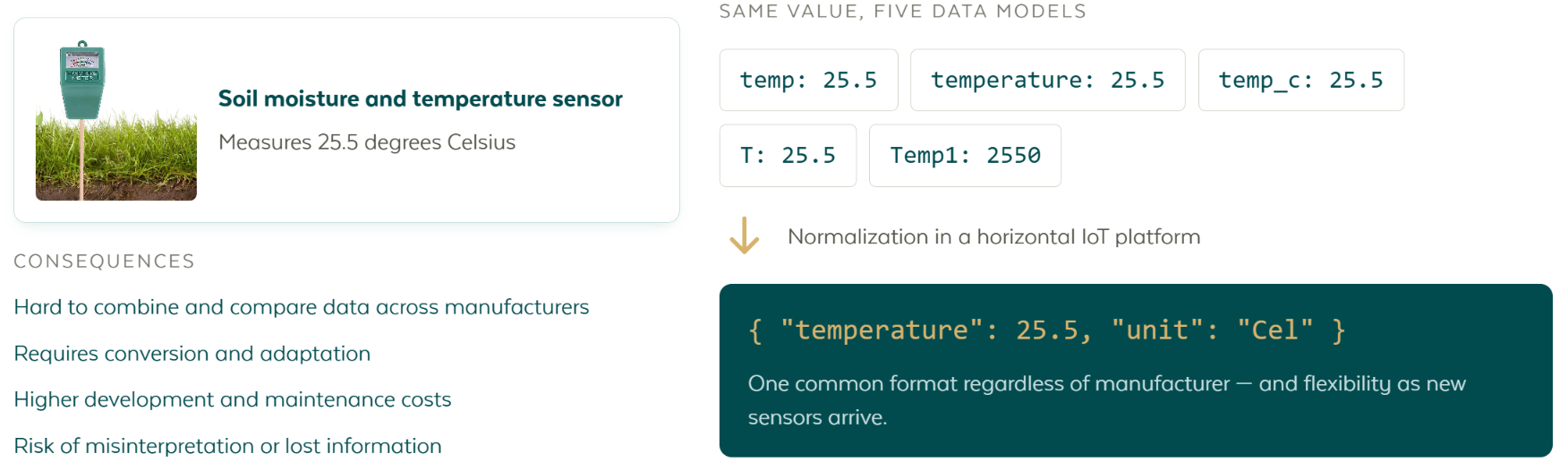
Solve it once and everything above becomes easy. Solve it per project and you will solve it forever. That is the whole argument for a horizontal IoT platform: receive data from many technologies and normalize it into one agreed shape, so that a dashboard, a rule or a report never needs to know what kind of device it came from.
Yggio does this with translators, small decoders that turn a manufacturer's payload into named, normalized fields. Countless device models are supported out of the box, the list grows continuously, and new ones are quick to add. That is what keeps the choice of sensor an engineering decision rather than a platform constraint. See Translators.
The IoT stack
Every IoT system has these layers, whether or not anyone drew them. Each depends on the one below and hides its details from the one above.
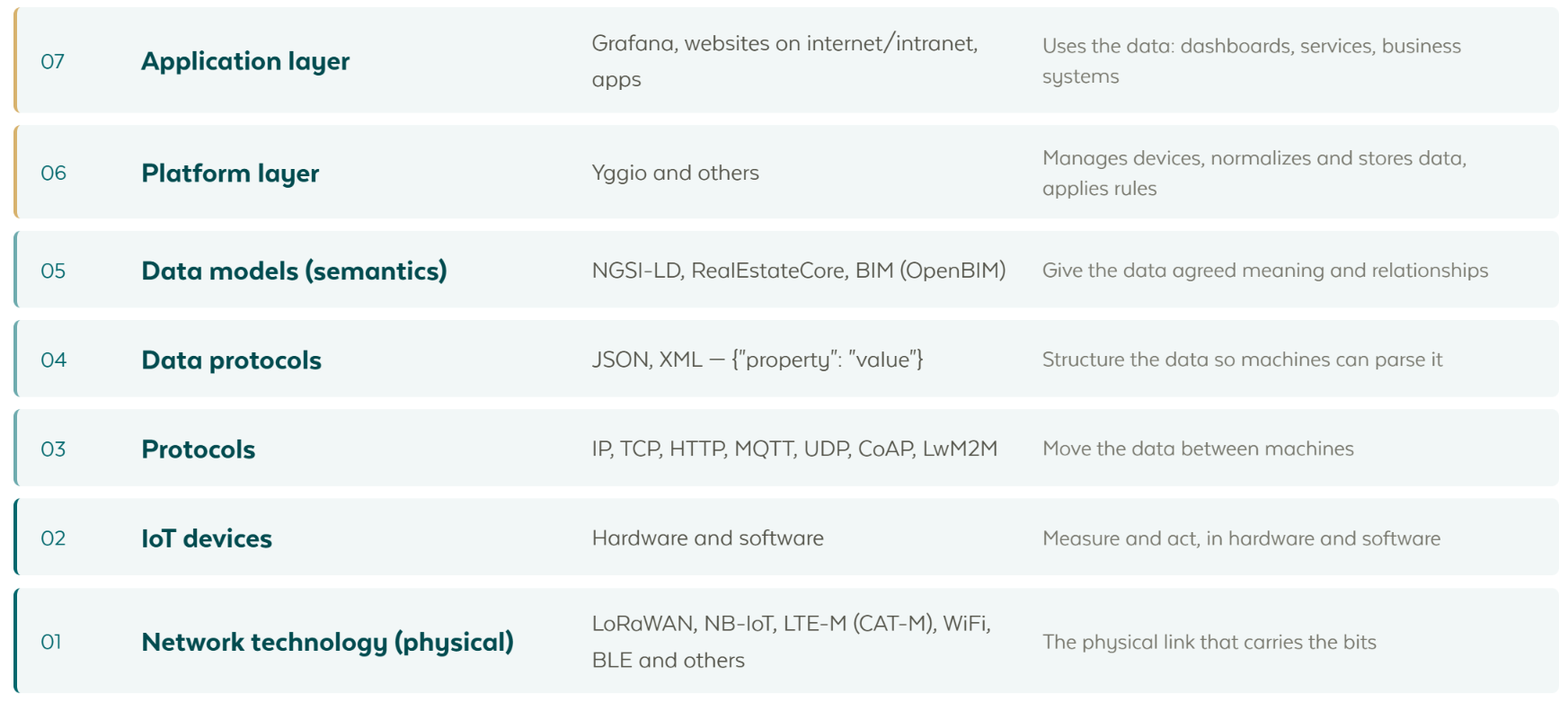
Read the rest of this guide from the bottom of that figure upwards:
- Devices, the sensors and actuators themselves.
- Network technologies, the radios and wires that carry the data.
- Protocols, the rules that move it reliably.
- Data formats, JSON and XML, how they are built and what they can express.
- Data models, which give the data agreed meaning.
- Platform and applications, where the value is collected.